
iPhones Update
You Can’t Use JV iPhone Anymore (Apple Finance Lock)
A few weeks ago, Apple insiders told us that Apple is going to release an update where those JV iPhones will be locked if there are unpaid payments; fellows call this “finance lock”. This is alarming, right? That’s why we say “You Can’t Use JV iPhone Anymore,” but let’s get inside and to know who will be impacted by this update
Yesterday, an Apple announcement caused a lot of confusion for new iPhone buyers in Pakistan. This raises a simple question: can an iPhone be restricted if financing payments are late or unpaid?
A Lightweight version for a joint venture (JV) iPhone
Just because it is a lightweight version for a joint venture (JV) iPhone does not make it automatically an Apple Upgrade iPhone. “In Pakistan’s used-phone market, ‘JV’ is basically shorthand for devices that have been linked with carrier restrictions, finance lock or network lock.” The backgrounds of different JV phones can vary greatly. That means, if you’re worried that every JV iPhone may be rendered useless in the wake of an iOS update, there’s no true verification that will happen right now. Let’s distinguish between what Apple is saying, what was uncovered in the iOS 28 beta code, and what has yet to be determined.
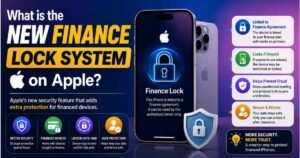
What is the new finance lock system on Apple?
Enthusiasts began taking notice of the term “Apple finance lock” after some developers found references to financing in a beta version of iOS 27. It seems the system was built to allow an approved financing provider’s app to send updates regarding a financing agreement status back to iOS. The framework would seem to limit certain restrictions if an agreement is no longer good. (9to5Mac) That is a massive step away from your normal SIM (or carrier lock). A carrier lock is a restriction that prevents the phone’s usage with any other mobile network. Qualifying for a financing-based restriction means it’s related to the financial contract backing the device.
For example, think of it like a financed car
If the vehicle is being financed—whether through a bank or dealership—then the financing company likely has legal rights once payment halts. Apple reportedly provides a framework based on a similar idea that kicks in if the device was financed or leased.
Nevertheless, that doesn’t mean Apple has announced a blanket payment lock for all iPhones. That distinction must remain at the heart of this story.
What Did iOS 27, Beta Reveal?
The initial discovery looked at some code embedded in an iOS 27 beta. 9to5Mac uncovered that the beta came with a framework simply called App Managed Features. Using a licensing provider app or financing could register a device and perform regular validations according to the finance agreement.
Elsewhere in the beta code were also mentions of:
- App-Managed Features
- Restricted Mode
- Partner Finance Lock
- Financing-related device status checks
- Find My integration
Financing-specific activation infrastructure
The findings above were authentic architectural artifacts from the beta. However, having functionality in beta code is one thing; getting Apple to weigh in on a use commercially, and a commercial relationship between the two parties, is quite another.
Beta revealed that Apple had constructed much of the actual capability to facilitate financing-related constraints. It did not show that all financed iPhones would be disabled after a missed payment.
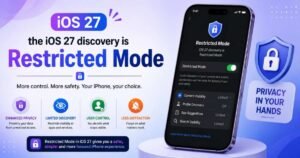
What Is Restricted Mode?
The most interesting element of the iOS 27 discovery is Restricted Mode. The mode would limit accessibility to a handful of essential apps (as exposed both in the code and in the 9to5Macs investigation into the beta version), while preventing access to a vast number of other apps. The following allowlist apps and services were seen: Phone, Settings (GSA 2023), App Store, Health, Wallet (App Store link), Passwords, Clock, among others. Any critical-alert or safety-related applications, however, might also stay up and running according to configuration.
For basic concepts, the idea was something like this:
The financing agreement gets limited, the status is notified by the provider, restrictions get applied by iOS, and previously selected core features stay functional.
- But there’s an important detail.
- No Set Number Of Missed Payments Was Confirmed
- There was never a universal rule made by the beta code saying:
- This means that “Miss a payment, and your iPhone is now locked.
- Rather, 9to5Mac has written that the app from the financing provider seems to decide.
- When restrictions are implemented based on its own policies.
In fact, there is no reliable historical evidence for a one-payment rule that applies universally. So the kinds of assertions, such as saying that one unpaid bill will break any financed iPhone you have, go way beyond the available evidence so far.
What Is a Partner Finance Lock?
Another rapid key discovery was Partner Financing Lock, which is often shortened to PFLock. While you don’t have your typical, personal device lock on the phone, it does seem like a sort of financing-only device lock. That system could stop a limited-financed device from being wiped and sold on or dismantled for spare parts.
That would be different from a regular carrier SIM lock. According to MacRumors, the beta features link finance-specific locks with Apple’s Find My network. But 9to5Mac specifically pointed out that this integration doesn’t seem to give the financing partner location access from the device.
That’s a key difference because some misconceptions about the feature floating around online have suggested it would automatically give any financing company full tracking access. The evidence thus far does not back up the claim.
Why Is Apple Even Going to Want a Finance Lock?
This directive is relatively straightforward from the position of business. If you pay for the devices in full, financing makes them a lot easier to purchase. But financing also creates risk.
When someone provides a device to another, and then there are no renewals of the subscription line, there exists an unpaid liability for the financing provider. Connecting payment status with the device via a technical system could provide another means for financing partners to protect their interests.
This model lends itself accurately to the Apple Upgrade. At the end of an Apple Upgrade lease, customers can ordinarily upgrade and return the device, exit from the program and turn it in, or purchase the unit utilizing any buy alternative accessible. That means that the financing relationship is unlike a direct purchase of an iPhone.
What Happens If You Don’t Pay Off Your iPhone?
This is where the original news requires a major correction. Initial reports linked the iOS 27 funding framework to Apple’s yet-to-be announced Apple Upgrade program. But Apple told us later that Apple Upgrade in and of itself would never trigger Restricted Mode because you missed a lease payment.
Apple has stated that it won’t be restricting access to Restricted Mode or limiting Apple Upgrade customers’ device functionality because of missed payments,
Therefore, the simplified claim:
Miss payment → Apple locks every Apple Upgrade iPhone is not accurate.
What Is Actually Confirmed?
As of August 12, 2026:
- Apple has launched Apple Upgrade in the United States.
- Apple Upgrade is provided through Klarna.
- Apple Upgrade is a leasing program.
- iOS 27 beta contains financing-related restriction frameworks.
- Restricted Mode exists in the beta implementation.
- Partner Finance Lock exists in the beta implementation.
- Apple says Restricted Mode will not be used for missed payments under Apple Upgrade.
- Apple has not clearly explained the final intended use of the broader financing framework.
That last point is the part buyers should watch.
Does Apple Actually Lock the Entire iPhone?
Not necessarily.
This is another area where headlines can be misleading. The beta’s Restricted Mode was described as restricting access to many apps rather than simply turning the entire phone into a useless brick. Essential applications could remain available. (9to5Mac)
That’s very different from completely disabling the hardware.
Four Different Types of Restrictions
| Restriction | What It Means |
| Restricted Mode | Limits access to selected apps and functions |
| Partner Finance Lock | Financing-related device lock designed to survive certain device resets |
| Carrier Lock | Restricts the device to a particular mobile network |
| Activation Lock | Links the iPhone to an Apple Account through Find My |
These terms should never be used interchangeably.
A phone can be carrier locked without having a financing lock.
Likewise, an iPhone can have a financing issue without being Activation Locked.
Apple Upgrade vs Traditional Carrier Financing vs JV iPhone
This is where Pakistani buyers need to be particularly careful.
| Feature | Apple Upgrade / Lease | Traditional Carrier Financing | JV iPhone |
| Who finances it? | Klarna in Apple’s U.S. program | Mobile carrier or financing partner | Varies by original arrangement |
| Ownership structure | Lease arrangement | Usually installment purchase | Depends on original deal |
| Missed payment consequence | Contract consequences; Restricted Mode not used for Apple Upgrade | Depends on carrier agreement | Depends on carrier/finance arrangement |
| Device restriction | Apple says no Restricted Mode for Apple Upgrade missed payments | May involve carrier-specific restrictions | Cannot be assumed |
| SIM/network restriction | Program devices are offered through supported carrier arrangements | Can remain carrier locked | Common in some JV phones |
| Can it be resold? | Lease terms matter; device may need to be returned or purchased | Depends on ownership and outstanding balance | Depends on financing and carrier status |
Apple’s U.S. financing details updated earlier today also noted that iPhones financed through AT&T, T-Mobile or Verizon installment plans can stay locked to the carrier until finished. (Apple)
The only reason why we see that is that it is a carrier financing policy, not proof that Apple’s new Restricted Mode gets applied to those mobile devices.
So what does this mean for JV iPhones in PK?
This is likely the key point of the whole story for buyers from Pakistan. JV iPhone is a common term in the Pakistan market. However, it does not represent an official product line for Apple.
A seller referring to a phone as “JV” does not explicitly indicate that:
- Which carrier originally sold it
- Whether financing is still outstanding
- Whether it is carrier locked
- If the original owner is still financially responsible
- If the device is supported for official unlocking
- If the device is PTA approved
- Whether it has been restored or altered
The thing is, “Apple will lock all JV iPhones” is a very general statement. For now, there is no solid proof to suggest that each and every JV iPhone in Pakistan will be finance locked by upgrading to iOS 27.

Apple Questions on How to Resell a Financed iPhone
Problems arise when an iPhone is lent to the sale before it is sold, which in turn builds up with the underlying agreement. Now, let us say that one gets an iPhone through the carrier financing and sells it to you after paying up to 2–3 installments. You now may have the actual phone in your hands, but the relationship could belong to that customer who purchased it under financing. That’s a risky situation.
Don’t buy a financed iPhone before asking:
Make sure you have indeed already paid off the device in full.
- Which carrier originally sold it?
- Is there an outstanding balance?
- Is the device still under a financing agreement?
- Is the original receipt available?
- Who is the account holder in the original?
- Is the phone carrier unlocked?
- Is the seller able to demonstrate the condition of the device?
Just because somebody possesses the physical iPhone does not mean that they paid off an obligation to finance it. This really matters when a phone looks too good to be true.
Things to Verify Before Tentatively Buying a JV iPhone
Do not believe the sellers saying, “This phone is clear.” Use a practical checklist instead.
IMEI
Verify the IMEI and ensure it corresponds to the actual device being sold as an iPhone.
The IMEI will assist us with uniquely identifying the device and also getting details on whether it is or not unsuspected.
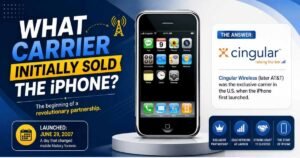
Original Carrier
What Carrier Initially Sold the iPhone?
This can be particularly crucial for JV devices brought in from abroad.
SIM Status
See if it supports the SIM or eSIM you want to use.
A carrier lock can block the use of another network.
Activation Lock
Verify that the Apple Account of the previous owner has been removed.
Do not even consider a second-hand iPhone that requests another person’s Apple Account on setup.
Financing Status
Ask whether the device was bought on a creditor’s installment payment plan.
If possible, ask for evidence that the agreement has been completed.
Will a Device Built in 2026 To Be A JV iPhone Be Safe?
In some cases, yes, JV iPhones are still attractive buys IF buyers and sellers know exactly what they’re getting into.
The issue here is not the word “JV.”
The issue with purchasing a phone is that you have to research before launching out into the effect limitations. If you constantly utilize Wi-Fi and understand its limitations, it can be a rational choice to pick up an affordable device. However, when do you need dependably serviceable cellular service, international travel support, resale flexibility, or long-term ownership?
When Can a JV iPhone Be More Dangerous:
The seller is unable to tell who the dupe carrier originally was.
- The financing status is unclear.
- The phone is suspiciously cheap.
- Your television is still associated with another account.
- The seller refuses IMEI checks.
- The PTA status is unclear.
- The seller offers an “unlocked” without paperwork.
- You have no receipt.
In my years of reviewing used-phone buying decisions, the greatest sin is to get caught up in the model rather than device history. Confused ownership history makes an iPhone 17 Pro Max a worse buy than an aging iPhone with clear provenance and confirmed status.
Which is official and which is still speculation?
The story has evolved from its initial reports, so here is the clearest perspective.
| Claim | Current Status |
| iOS 27 beta contains financing-related code | Confirmed in beta code |
| App Managed Features exists in the beta | Confirmed in beta code |
| Restricted Mode exists in the beta | Confirmed in beta code |
| Partner Finance Lock exists in the beta | Confirmed in beta code |
| Apple Upgrade launched in the U.S. | Confirmed |
| Apple Upgrade is provided by Klarna | Confirmed |
| Apple will restrict Apple Upgrade devices after missed payments | Not true according to Apple’s clarification |
| One missed payment locks every iPhone | Not confirmed |
| Every JV iPhone in Pakistan will be locked | No reliable evidence |
| The finance framework may be useful to other financing partners | Possible, but not confirmed by Apple |
This distinction is crucial.
The original AppleInsider report accurately highlighted the significance of the iOS 27 beta discovery at the time. (AppleInsider) But subsequent reporting and Apple’s own clarification changed the picture around Apple Upgrade specifically. (9to5Mac)
Frequently Asked Questions
You can train with debts up till October 2023.
The answer will vary depending on how the financing is structured.
Apple upgraded and says that missed payments don’t trigger Restricted Mode under its Apple Upgrade program. However, even iOS 27 beta does provide a more comprehensive financing framework that could restrict under limited financing recourse. (9to5Mac)
Does missing a payment lock an iPhone?
Universal one-payment rule not confirmed
Instead, the iOS 27 beta code didn’t state a maximum number of missed payments. The lender and the nature of its policies seem to make their own rules as to when contingencies get triggered. (9to5Mac)
What is Apple’s Restricted Mode?
Restricted Mode is a financing mechanism accessed in the iOS 27 beta code.
It can block many apps except some required ones. But Apple has no plans to use this mode for missed payments as part of its new Apple Upgrade program. (9to5Mac)
What is Partner Finance Lock?
Partner Finance Lock—This is a lock found in iOS 27 beta, which is specifically for financing.
It seems like this is to stop a device with restricted finances from just getting wiped and sold or completely dismantled. It links into Apple’s Find My infrastructure, but available reports suggest tracking partners don’t actually receive information about the location of a device via this method. (9to5Mac)
If a JV iPhone is owned by someone who stops paying, will it still work?
Given that Apple will launch a serious threat to the iPhone JV model in Pakistan by introducing an innovative financing framework of IOS 27, nothing shows that every joint venture iPhone in a particular country is still working.
The real risk from a JV phone is determined by the carrier and might be higher if you’re paying it off over time as well as other restrictions (like not being able to switch carriers).
So, is it possible to sell a financed iPhone?
That is dependent on the structure of the financing agreement and if the device has been paid off.
Simply because a seller has possession of a financed iPhone, that doesn’t mean they can sell it without consequence.
You have a rolling window of data up until October 2023.
Carrier financing and network-lock policies differ.
According to Apple’s US info from this month, it’ll also continue to be carrier locked under the terms of certain carriers’ installment plans until fully paid off. (9to5Mac)
That is different from Apple’s Restricted Mode framework.
Can I buy a JV iPhone in Pakistan?
Not all JV iPhones are instantly unusable.
Hence, the crucial aspect here is which kind of lock it has on that phone in particular.
Do not buy it until you check the original carrier, financing status, IMEI, activation lock status, SIM locked/unlocked status, and PTA status & proof of purchase.
What if the previous owner decided to stop paying installments?
It all depends on the initial financing agreement.
However, the new owner should never think that buying a physical device somehow cancels or allows him to inherit the debts created by his predecessor.
It is therefore very important to check what the financing status is before buying.
Does this mean that the Apple Finance Lock process is the same as the Activation Lock?
No.
Activation Lock is Apple’s security system (Find My/Apple Account).
Partner Financing Lock is another financing-related mechanism discovered in iOS 27 beta.
What is an Apple Finance Lock, and how is it different from a carrier lock?
No.
A carrier lock limits the iPhone to a specific mobile network.
One restriction related to financing is the status of financial agreements.
One does not necessarily imply the other.
Conclusion
The title “JV iPhone No Longer Working” is exaggerated; we have to examine it further. Indeed, Apple did launch an all-new, U.S.-only Apple Upgrade leasing initiative, and some technology tied to financing (such as Restricted Mode and Partner Finance Lock) appears in the code of iOS beta 27 (Apple). Apple has since clarified that missed payments on Apple Upgrade leases will not cause Restricted Mode. Likewise, Apple has not publicly explained how the wider finance framework within iOS 27 is going to be applied. Hence, Pakistani buyers should never get the false impression that each of the ways in JV iPhone gadgets will go off a cliff with iOS 27. Meanwhile, the development is one to keep an eye on.
Sources for Further Reading
- Apple—Official Apple upgrade announcement
- Apple clarification on Restricted Mode and Apple Upgrade—9to5Mac
- AppleInsider—First reported iPhone finance lock
Check out our JV iPhones to get a superior device at an affordable price.
Read More.
